Two Minutes on the Clock: Why the Best Dragons Play the Final Drive, Not the First Quarter
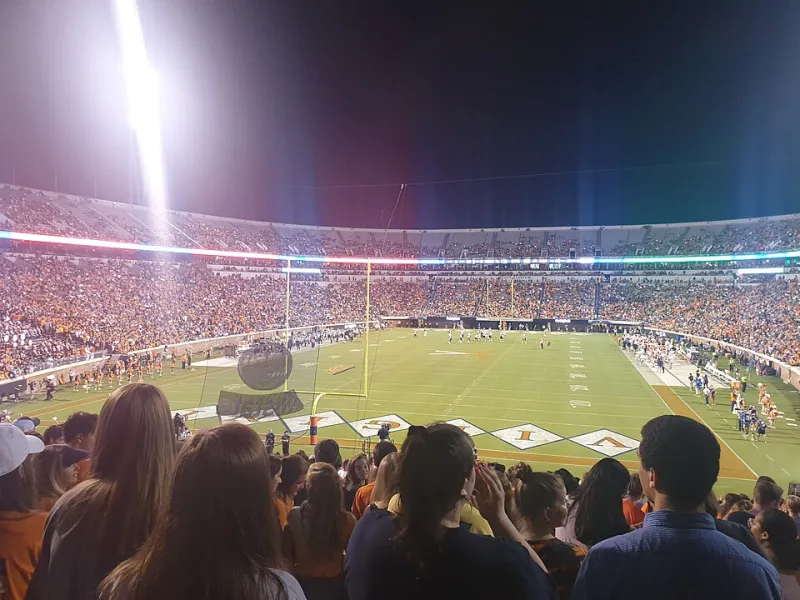
Photo: carlinmack, CC0, via Wikimedia Commons
There's a moment in every football game that separates the fans from the fair-weather crowd. It's not the opening kickoff, when the stadium is full and everybody's undefeated. It's not the halftime show, either. It's the fourth quarter, when the scoreboard looks ugly, half the parking lot has already emptied, and the true believers are still on their feet.
If you've been holding through this market, you already know exactly which quarter we're in.
The Exits Get Crowded First
Here's a truth every American sports fan learns early: the parking lot traffic is worst when the home team is losing badly in the third quarter. Bandwagon fans beat the traffic. They leave early, they miss the comeback, and then they show up at the water cooler Monday morning acting like they were there for every snap.
Sound familiar?
Every dip brings a fresh wave of paper hands heading for the exits, wallets in hand, muttering about how they "knew it was too good to be true." Meanwhile, the holders who actually studied the film — who understood the project, the chain, and the culture — are still in their seats. Not because they're stubborn. Because they know how the game works.
The Comebacks That Built the Legend
American football gave us some of the greatest comeback stories in sports history, and they all share one ingredient: somebody refused to leave.
Think about the Bills' famous comeback against the Oilers in the 1993 playoffs. Down 35-3 at halftime. Backup quarterback Frank Reich leads the largest comeback in NFL history. If you left at halftime to beat traffic, you missed the greatest fourth quarter ever played — and you don't get to claim it retroactively.
Or the 2017 Vikings' Minneapolis Miracle, where a 61-yard touchdown on the final play flipped a game everyone had written off. Or Tom Brady and the 28-3 comeback in Super Bowl LI, which has become shorthand in American sports for one simple idea: it's over when it's over, and not a second before.
The market runs on the same clock. Red candles are the third quarter, not the final whistle. And the holders who treat every dip like a two-minute drill still in progress — eyes downfield, poise intact — are the ones holding the trophy when the drive finishes.
What a Two-Minute Drill Actually Looks Like
There's a reason the two-minute offense is its own art form. The clock is against you, the crowd is loud, and every second matters. Great quarterbacks don't panic in that situation. They don't throw the ball away out of fear. They run the offense they practiced all week.
Your portfolio deserves the same discipline:
- Run your practice reps. If you did your homework before aping in, trust the film. Panic is what people do when they never had a plan.
- Ignore the crowd noise. The timeline is the loudest stadium on earth. Half of it is opposing fans heckling. Mute it.
- Manage the clock, not your emotions. Zoom out. The drive that matters is measured in months and years, not five-minute candles.
- Keep your poise. The great ones look bored under pressure. The most based dragon in the room is usually the quietest one.
No Paper Hands in the Fourth Quarter
Here's the part nobody likes to hear: the comeback only counts if you're still holding the ball when it happens. Every legendary drive in NFL history required somebody to keep believing when the win probability graph looked like a ski slope.
ChadRizard was never a project for people who need constant reassurance. It was built for the folks who show up in the fourth quarter, down but not out, still believing in the drive. The ones who understand that generational wealth — like generational franchises — is built by the fans and holders who stayed through the lean seasons.
The stadium empties. The noise dies down. And the people still in their seats? They're the ones who get to tell the story later.
Keep your helmet on. The drive's still alive. 🐲