Crank the Amps: The Unfinished-Basement Blueprint Behind Every Legendary Movement
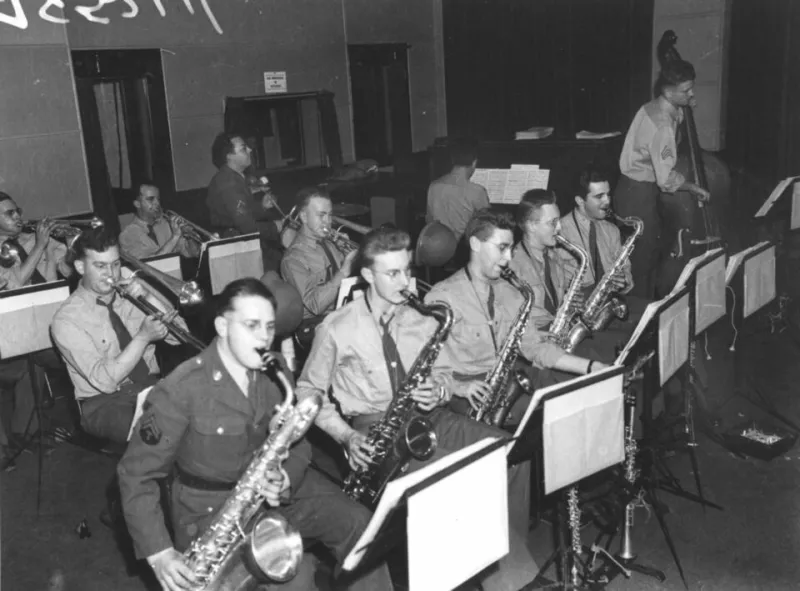
Photo: State Library of Queensland, Australia, No restrictions, via Wikimedia Commons
Start Where the Sound Is Bad
Every great American band has an origin story that sounds embarrassing when you say it out loud. The Ramones couldn't really play when they started. Nirvana practiced in a shed in Aberdeen, Washington, where the rain leaked in and nobody in town cared. The Beatles — fine, not American, but bear with us — played lunchtime sets in a Liverpool cellar to twelve people eating meat pies.
The pattern is stubbornly consistent: the thing that becomes legendary starts out sounding bad in a room with poor acoustics. If it sounds polished on day one, it's usually a product, not a movement. Products get copied. Movements get followed.
Which brings us to a certain dragon on Base.
The Cringe Phase Is Not a Bug
There's a specific moment in every grassroots story when the establishment looks at it and says, plainly, "this is ridiculous." Vinyl was ridiculous after the CD. Fantasy football was ridiculous to actual GMs. Buying pictures of a cartoon dragon with diamond hands? You've heard the take. You've probably been at a Thanksgiving table where someone delivered it.
Here's the thing about that moment: it's not a warning sign. It's a milestone. Every grassroots movement in American culture — music, sports, tech, crypto — passes through a cringe phase where the early adopters look slightly unhinged to everyone else. The garage band playing to nobody on a Tuesday night in Ohio. The fantasy league commissioner running spreadsheets before ESPN caught on. The Bitcoin guy at the barbecue in 2013.
Being cringe early is tuition. You pay it once, and later, when the thing gets big, you're the one with the story. The people who waited until it was cool don't get a story. They get a subscription.
Why the Establishment Always Misses It
The reason institutions miss grassroots movements isn't stupidity — it's incentives. A record label evaluates bands against what already sells. A sports franchise evaluates talent against existing systems. Crypto VCs evaluate projects against decks that look like other decks.
But garage movements don't optimize for evaluation. They optimize for the people in the room. The band that sounds rough but makes forty strangers in a basement lose their minds has something a polished act doesn't: a following that shows up when nobody's filming.
That's the entire thesis of holder culture, and it's why we talk about it constantly around here. A community that shows up in the quiet — the flat-chart weeks, the zero-hype Tuesdays — is worth more than a trending topic with a seven-day shelf life. The Ramones weren't playing to empty rooms because they were bad. They were playing to empty rooms because the room hadn't caught up yet.
Loud, Unpolished, and Impossible to Fake
There's a reason the garage-band aesthetic became iconic: you can't manufacture it. Once a band gets a label budget, the rough edges sand off. Sometimes that's growth. Sometimes it's just sanding off the thing people loved.
Crypto has the same dynamic. Projects that launch polished, with paid influencers and a twelve-page litepaper full of words like "synergistic," tend to feel like products. Projects that launch loud, scrappy, and a little ridiculous — a Chad dragon breathing fire on a chain named Base, for crying out loud — tend to feel like bands. And bands build scenes. Scenes build staying power.
The unpolished part matters more than people admit. It's the proof of work, in the non-blockchain sense. It says: we were here before it made sense to be here.
The Follow-Through Is the Hard Part
Here's where the garage band analogy earns its keep, because it cuts both ways. For every band that made it out of the garage, a thousand stayed there — not for lack of talent, but for lack of follow-through. The ones who made it kept playing after it stopped being fun, after the van broke down, after the third show in a row drew four people.
Sound familiar?
Holding through a flat market is the crypto equivalent of playing a Tuesday-night gig to the bartender. It's not glamorous. Nobody claps. But it's the entire difference between a hobbyist and a band. The chart will do what the chart does. What you control is whether you're still in the room when the sound finally catches up.
Crank It
So the next time someone calls the community noisy, or the memes cringe, or the whole thing ridiculous — take it as confirmation. The Ramones heard it. The fantasy football guys heard it. Every early Bitcoiner heard it at a barbecue.
The establishment dismissing you is the sound of the mainstream warming up. Dragons don't tune down for anybody. Crank the amps, keep playing the small rooms, and let the neighbors complain.
They always complain right before they buy tickets.